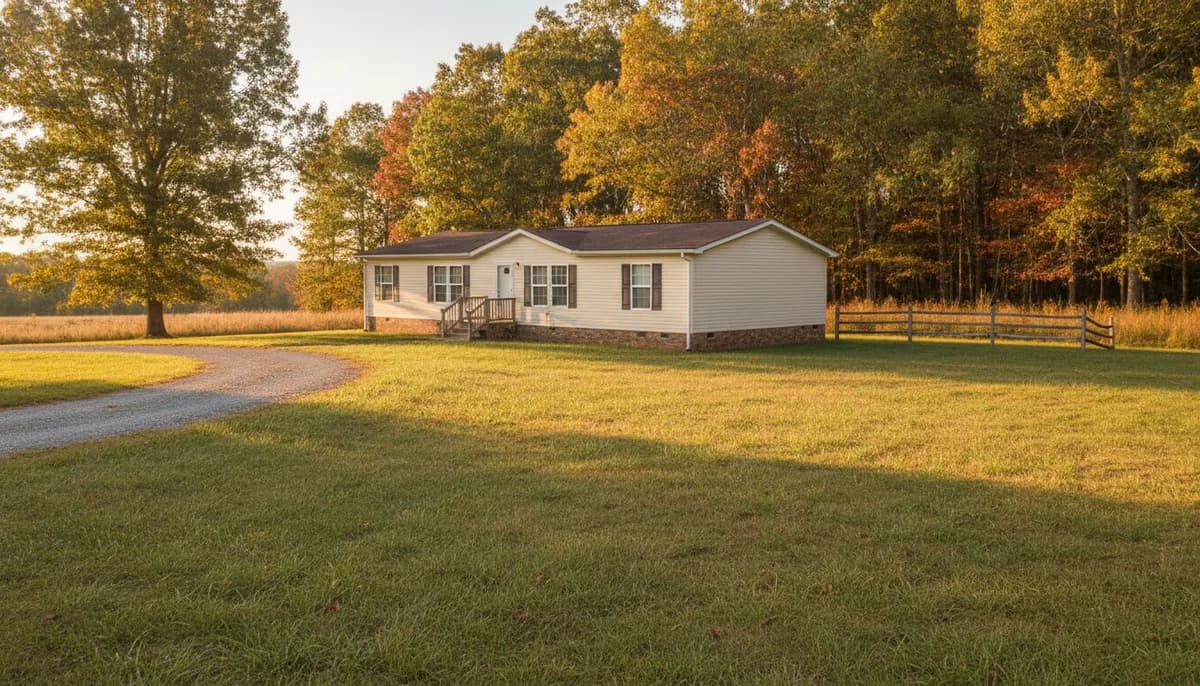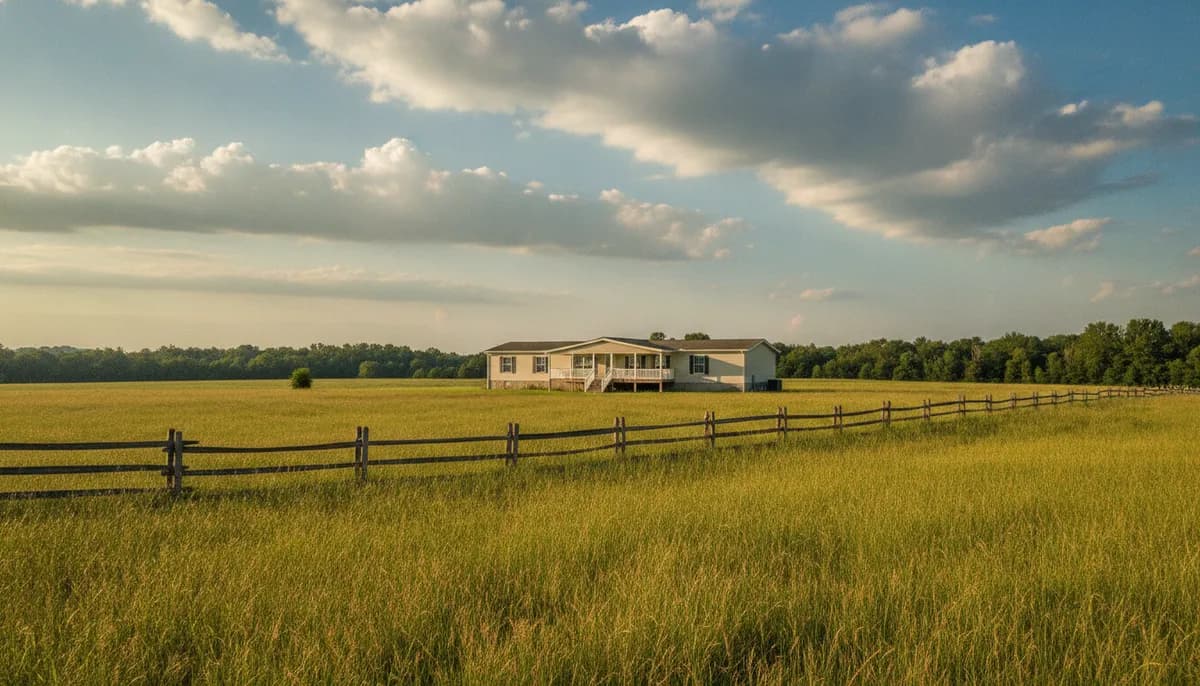
The area around Fredericksburg is not one manufactured housing market. It is several, separated by county lines that carry real consequences for what you can do with a home and what it is worth.
We are based here, and the pattern that matters most to sellers is this: over the past two decades the land under many of these homes appreciated considerably faster than the homes themselves. That gap is the single most useful thing to understand before you sell.
Why the land moved and the home did not
The I-95 corridor between Fredericksburg and Washington absorbed sustained commuter growth. Land within reach of the VRE stations and the interstate got competitive, and parcels that were unremarkable rural acreage in 2000 became genuinely valuable.
Manufactured homes do not follow that curve. A home from the 1990s has depreciated on the usual path regardless of what happened to land values around it, and it may have aged out of the range most lenders will finance.
The practical consequence for anyone who owns both: your parcel and your home may need to be valued as two separate things, because the market is valuing them separately. Owners who assume the whole property rose with the land are often working from the wrong number in both directions.
How the counties actually differ
This is where local knowledge earns its keep, because the rules are not uniform.
Spotsylvania County. Large, with substantial rural acreage west and south of Fredericksburg alongside dense suburban development near the city and the Route 3 corridor. Manufactured homes on private acreage are common in the western and southern parts of the county. Buyer demand is generally strongest where a parcel is commutable, and drops off with distance from I-95.
Stafford County. Stronger commuter orientation, closer to Quantico and the Washington job market, with land values reflecting it. Suburban development has replaced a good deal of what used to be rural acreage. Sellers here are frequently in the position described above, where the land carries most of the value.
Caroline County. More rural, more affordable, and traditionally more accommodating to manufactured housing on private land. Lot sizes are larger and buyers are less commuter-driven, which produces different demand behavior than Stafford.
King George County. Smaller, shaped by the Dahlgren naval installation and its employment base. A more contained local market where demand is steadier but thinner.
City of Fredericksburg. An independent city rather than part of any county, with its own zoning. Manufactured housing on individual city lots is limited, and most activity in the immediate area sits in the surrounding counties.
The important qualifier: zoning ordinances, minimum lot sizes, setback rules and manufactured housing placement standards are set locally and they change. Nothing above substitutes for calling the planning or zoning office of the specific county about a specific parcel. If you are relying on what a neighbor did in 2009, verify it.
Septic, wells and why rural parcels get complicated
Most manufactured homes on private land in this region rely on a well and an on-site septic system rather than public utilities.
That introduces conditions that regularly surface at the worst moment:
- The septic system has to work and has to be appropriately sized. Buyers pursuing financing will generally need it inspected. A failed system on a parcel with poor soil can be expensive, and in some cases the replacement options are limited by what the soil will actually support.
- Older systems may have no permit record. If a system was installed informally decades ago, the county may have nothing on file, which complicates any transaction requiring documentation.
- Well water testing is a routine part of financed transactions.
None of these is unusual and none is fatal. They are simply the items that take weeks to resolve if you discover them after accepting an offer rather than before listing.
What actually determines your buyer pool here
Three factors, in rough order of impact.
First, is the home titled or converted to real property? This decides whether a buyer can get a mortgage at all. On owned land in this region, where parcels carry real value, conversion often makes a substantial difference to who can bid. Our guide on telling which one you have covers the checks, and the financing article explains why it matters so much.
Second, was the home built after 15 June 1976? Pre-HUD-Code homes sit outside most institutional lending regardless of anything else.
Third, what condition is the home in? Virginia's humidity and freeze-thaw cycles are hard on manufactured homes in specific ways, and lender inspections have standards.
Land quality, road frontage and commutability matter too, but they mostly set the ceiling. The three items above determine whether anyone can reach it.
The situation we see most often around here
An owner inherited or has long held a parcel with an older manufactured home on it. The home has genuinely deteriorated. The land, meanwhile, is worth considerably more than anyone in the family expected.
The reflex is to price the property as a package and wait. The better move is usually to establish what the land is worth on its own, and then determine whether the home adds value, adds nothing, or actively costs money to deal with. For a badly deteriorated home on a good parcel, the home can be a liability against the land value rather than an addition to it.
That is an uncomfortable conclusion and it is frequently the accurate one. Knowing it early lets you market the property to the right buyer instead of waiting for one who does not exist.
If you want a straight read
We buy manufactured homes throughout Virginia and we work this region in particular. We can usually tell you quickly whether your value sits mostly in the land, mostly in the home, or genuinely in both, and what would need clearing before any sale could close.
We will also tell you when your property is in good enough shape and clean enough title that you should list it on the open market instead, because in this corridor, for a converted home on a commutable parcel, that is often the better outcome.
Send us the parcel details and we will give you an honest read rather than a pitch.
This article describes general market and regulatory conditions and is not legal, zoning or tax advice. Zoning ordinances, septic requirements and permitting vary by locality and change. Confirm anything specific with the relevant county planning, zoning or health department.
Sources: Virginia Department of Health, Onsite Sewage and Water Services; Code of Virginia section 46.2-653.1